Dying in Plain Sight: The Volunteers Racing to Photograph Every Rusting Gas Station Sign in America
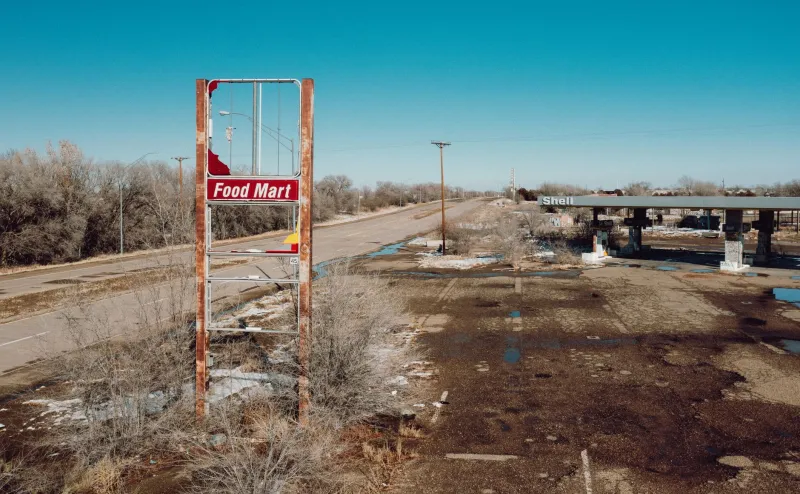
There's a particular kind of melancholy that hits when you notice a gas station sign you've driven past a hundred times is suddenly just... gone. No announcement. No ceremony. One week it's there — some faded relic of a brand that stopped existing before you were born — and the next week there's a blank pole, or worse, a fresh LED panel advertising a convenience store chain that looks identical to every other one in the country.
For most people, that's a small, forgettable sadness. For a surprisingly dedicated corner of the internet, it's a call to action.
The Signs Nobody Was Supposed to Care About
Gas station signage doesn't exactly scream "cultural artifact." These were commercial objects, designed to be visible from a moving vehicle, built to sell fuel and motor oil and maybe a cup of bad coffee. They were never meant to be preserved. And that's exactly why they're disappearing so fast.
The community that's formed around documenting them operates mostly through a loose network of Facebook groups, dedicated subreddits, and a handful of purpose-built databases that don't look like much from the outside but contain thousands of geotagged photographs, ownership histories, and condition reports. The people contributing to these archives are a mix of road-trip photographers, regional historians, former gas station employees, and a certain breed of infrastructure nerd who gets genuinely excited about porcelain enamel and neon tube work.
The signs themselves range from the nationally recognizable — the Sinclair Dino, the Flying Red Horse from Mobil's Pegasus era, the old Texaco star — to hyper-regional brands that only ever existed in a few counties. It's that second category that the most serious documentarians are chasing. A Sinclair sign has a decent chance of ending up in a museum or a private collection. A sign for "Hank's Cut-Rate Gas" from somewhere outside Amarillo, Texas, probably doesn't.
How They Actually Do It
The methodology, such as it is, involves a lot of driving. Members of these communities will plan road trips specifically around reported sightings — someone posts a photo they took passing through rural Missouri, someone else cross-references it against old Sanborn fire insurance maps or county property records to pin down the original station's history, and suddenly a weekend drive has a mission.
Verification is a bigger deal than you might expect. Reproductions and salvaged signs that have been moved from their original locations get flagged and noted. A sign that's been relocated to someone's man cave or a roadside antique barn is still worth photographing, but it gets cataloged differently than one that's still standing where it was installed in 1958. Provenance matters here the same way it matters in any other collecting world.
Condition reporting follows a rough grading scale that the community has developed informally over time — full color retention, partial fade, significant rust or damage, illegible. The goal isn't just to record that a sign exists, but to document its current state so that future photographs can track the deterioration. Some of these signs have been monitored across dozens of visits over fifteen or twenty years.
The Marketplace Hiding in Plain Sight
Because where there's obsessive documentation, there's eventually commerce. Vintage gas station signs have become a legitimate and surprisingly pricey segment of the broader petroliana collecting market — a word that took some getting used to but apparently refers to all petroleum-industry memorabilia, from pump globes to paper maps to the signs themselves.
Authentic porcelain enamel signs from major brands in good condition can sell for several thousand dollars. Rarer regional pieces, especially with unusual graphics or unusual sizes, can go higher. Online auction platforms and specialized dealers have formalized what used to be mostly flea market and swap meet transactions, and the documentation community feeds directly into this market — not always intentionally.
There's some tension there. Plenty of people in the documentation world are explicitly not interested in the commercial side. They're photographing signs that are still standing, often on private property or attached to structures that are still technically in use, and the last thing they want is for their photos to function as a shopping catalog for sign hunters who might approach property owners with cash offers. A sign that gets sold and moved is a sign that loses its geographic context, which matters a lot to the historians in the group even if it doesn't matter much to the buyer.
Why a Dinosaur on a Metal Sheet Matters
Ask someone in this community why they do it and you'll get answers that range from the practical to the almost philosophical. The practical answer is that these objects are a physical record of how Americans moved through space for most of the twentieth century. The gas station was infrastructure, yes, but it was also a landmark, a waypoint, a piece of geography that people organized their mental maps around. When the signs go, some of that spatial memory goes with them.
The more philosophical answer has to do with what gets decided is worth saving. Museums and preservation organizations make choices about which pieces of the past deserve resources and attention, and utilitarian roadside commercial objects have historically not made the cut. The communities doing this work have essentially decided to route around that institutional indifference. They're not waiting for someone to declare these things historically significant. They're just documenting them anyway.
There's something very SpotDW about that, honestly — the idea that significance doesn't require official recognition, that the thing worth paying attention to is often the thing everyone else walked past.
The Clock Is Real
The urgency is genuine. Porcelain enamel, the material used in most pre-1970s signs, is durable but not immortal. Weather, rust, vandalism, and simple neglect take their toll over decades. Signs mounted on structures that get demolished disappear overnight. Others get sold off when a property changes hands and end up who knows where.
The documentation community estimates — and it's a rough estimate, based on what they've cataloged versus what they know they're missing — that a significant percentage of surviving vintage gas station signs are in active deterioration right now. Some will be gone within a decade. Others might last another fifty years in the right conditions.
The database projects, the geotagged photo archives, the condition tracking — none of it saves the signs themselves. But it saves the record of them, which is the part that matters to historians and, eventually, to anyone who wants to understand what America actually looked like when it was being built.
Somewhere out there, a Pegasus is still flying on a rusting pole outside a town you've never heard of. Someone is probably already driving toward it with a camera.