Underfoot and Overlooked: The Archivists Who Treat Demolished Theater Carpet as Cultural History
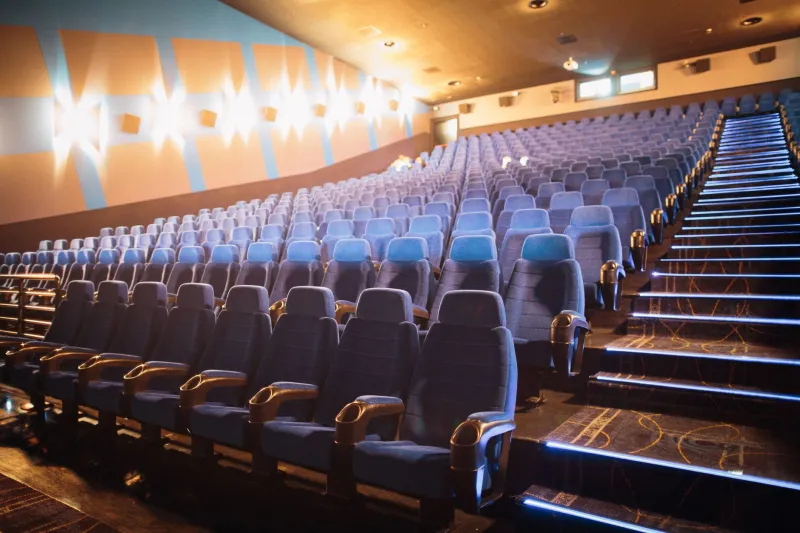
There's a specific kind of grief that hits when a movie theater closes. The marquee goes dark. The concession stand gets gutted. And then, usually before anyone thinks to care, the carpet gets ripped out and thrown in a dumpster. For most people, that's just demolition noise. For a quietly obsessive community scattered across the US, it's a cultural emergency.
These are the people photographing movie theater lobby carpets before they disappear forever — and they're building something that looks, depending on your perspective, either completely unhinged or genuinely important.
It Started With a Pattern Nobody Could Name
Ask most people in this community how they got into it, and the story usually starts the same way: a childhood memory they couldn't shake. A specific swirl of burgundy and teal. A geometric repeating pattern that somehow made the whole experience of going to the movies feel cinematic before the film even started. Then, decades later, the theater gets torn down or renovated, and the carpet is just gone — no record, no photo, nothing.
That absence is what pulled people like Marcus, a 44-year-old from Columbus, Ohio, into what he now calls "lobby documentation." He runs a spreadsheet — nearly 800 entries — tracking carpet designs from theaters across the Midwest, sourced from old photos, urban exploration forums, and his own road trips with a camera.
"People document the architecture. They document the neon signs. Nobody was doing the floors," he says. "But the carpet was part of the whole sensory package. It's the first thing you actually touched when you walked in."
The Aesthetics Were Never Random
Here's the thing that surprises most people when they start paying attention: theater lobby carpets weren't just ordered out of a generic catalog. The designs were intentional, often commissioned or selected specifically for the cinema industry, and they evolved in really distinct ways across different eras.
The bold, almost aggressive geometric patterns of the 1970s and early 80s — lots of high-contrast color, angular shapes — gave way to the swooping, almost oceanic curves of the late 80s and 90s multiplex boom. Regional chains had signature colorways. Some national chains used the same pattern in every location, which means a carpet photographed in a demolished AMC in suburban Atlanta might be an exact match for one that got ripped out of a theater in Fresno.
That kind of cross-referencing is exactly what the more database-oriented members of this community live for.
Denise, who runs a Discord server dedicated to what members call "theater textiles," has been crowdsourcing pattern matches for about three years. Her server has around 600 members, a fraction of whom are what she'd call "hardcore contributors" — people who actively submit documentation rather than just lurking.
"We've confirmed at least four instances where the same carpet manufacturer sold essentially the same design to competing chains in the same decade," she says. "That tells you something about how the industry worked, what the supply chain looked like, what aesthetic ideas were moving through the culture at that moment."
The Tools Are Low-Tech, the Stakes Feel High
The methodology here is deliberately unglamorous. A phone camera. Good lighting if you can get it. A measuring tape for scale. Some contributors use grid overlays to map the repeat pattern so it can be matched against other submissions. A few have started using basic image recognition tools to flag potential duplicates in the archive.
What they're building doesn't look like a museum collection. It looks more like a forensic database — which is sort of the point. The goal isn't aesthetic appreciation for its own sake. It's preservation of a record that nobody official thought to keep.
The Library of Congress isn't cataloging multiplex carpet. Historic preservation organizations are focused on architecture, signage, the things people can agree look important. The floor is invisible in that framework, literally and figuratively.
"If you walked into a diner from 1955, people would lose their minds over the original tile," Marcus points out. "The carpet from a 1987 Cineplex Odeon is the same age as some stuff that gets preservation consideration now. We're just early."
What Gets Lost When the Carpet Goes
There's a real argument to be made about what these textiles represent beyond nostalgia. Movie theaters in America were, for most of the 20th century, one of the few genuinely public spaces where economic classes mixed. The lobby carpet was part of an intentional design language meant to signal that you were entering somewhere special — somewhere outside of ordinary life.
The shift away from ornate, distinctive lobby design toward the utilitarian aesthetic of modern multiplexes tracks almost perfectly with broader changes in how Americans relate to shared public space. The carpet got cheaper and more generic as the experience got more transactional.
Documenting the old stuff, then, isn't just about the carpet. It's about recording a design philosophy that reflected a specific cultural moment — when going to the movies was an event, not just content consumption.
Several contributors have started reaching out to commercial carpet manufacturers to dig through old order records and design archives. It's slow going. Most companies don't maintain those records past a certain point, and some of the smaller regional manufacturers that supplied independent theaters have been out of business for decades.
The Community Stays Small on Purpose
This isn't a hobby that scales easily into mainstream internet culture. There's no viral TikTok angle, no obvious merchandise play. The Discord server stays invite-only, not out of elitism but because the quality of the archive depends on contributors who actually know what they're doing.
"We had a period where a lot of people joined just to post random carpet photos from, like, their office building," Denise says, with the tone of someone who has survived a small but real bureaucratic crisis. "We had to tighten things up."
The database is currently not public, though there are conversations about building a more accessible interface — something that lets researchers, historians, or just curious people search by era, region, or pattern type. Funding is the obvious obstacle. Grant applications for carpet archiving tend to get a certain kind of response.
But the work continues regardless, one demolished lobby at a time. Somewhere right now, a theater is being gutted for conversion into a fitness center or a church or a Dollar General. And if someone in this community has heard about it, there's a decent chance they've already been there with a camera, getting the floor documented before the dumpster arrives.
It's a small act against forgetting. And honestly? The carpet was always worth looking at.