One Week of Fame, Decades of Mystery: The Volunteers Hunting Down Everything a Forgotten Chart-Topper Ever Recorded
Somewhere in a suburb outside Columbus, Ohio, a retired postal worker named Dennis has a spreadsheet with 847 rows. Each row is a recording — confirmed, rumored, or suspected — by a band called The Silvertones, who had one song graze the Billboard Hot 100 in 1971 before dissolving so completely that their Wikipedia page is three sentences long and two of them are wrong.
Dennis has been building that spreadsheet for eleven years.
"Most people think a one-hit wonder is just the hit," he said in a message exchange through a music preservation forum. "But that's like saying a person is just their most embarrassing moment. There's always more. There's almost always a lot more."
He's not alone. Across message boards, Discord servers, and a handful of surprisingly active subreddits, there exists a loose but remarkably dedicated community of music archivists — mostly volunteers, mostly self-taught — who have quietly made it their mission to reconstruct the full recorded legacy of artists who, by most cultural measures, don't register anymore.
The Iceberg Below the Hit
The conventional music industry has always been better at celebrating longevity than excavating brevity. Legacy acts get box sets. Catalog artists get reissues with liner note essays written by critics who were in college when the records dropped. But the one-hit wonder — that strange, almost mythological figure who briefly captured something in the cultural air and then slipped back out of it — tends to get treated as a punchline rather than a subject worth studying.
What the archivists in this community understand, almost intuitively, is that the hit was usually the anomaly, not the whole story. Most of these artists had been recording for years before anything landed. They put out regional singles on small labels. They cut demos that got shelved. They played sessions for other artists, sometimes uncredited. They kept going after the moment passed, releasing records that sold almost nothing but existed nonetheless.
All of that material is out there. It's just scattered — pressed on vinyl that ended up in estate sales, dubbed onto cassettes that got stacked in someone's garage, documented in trade magazines that never got digitized.
"The hit is the door," says one archivist who goes by the handle Lacquer_Groove on several forums. "But once you open it, there's this whole house nobody's been inside in decades."
Racing the Clock, One Estate Sale at a Time
The urgency driving a lot of this work is demographic. The session musicians who played on these recordings are in their seventies and eighties now. The A&R reps who signed these acts, the local radio DJs who championed them in mid-sized markets, the photographers who shot the promo stills — that entire generation of witnesses is thinning out fast.
A woman named Carolyn, who coordinates what she loosely describes as an "interview network" for one of the larger preservation communities, estimates that her group has conducted over two hundred recorded conversations with people connected to forgotten acts from the late sixties through the early nineties. Some of those interviews happened just weeks before the subject died.
"We almost missed a bass player who played on three sessions for an act that had a minor hit in 1968," she said. "He was the only person alive who knew why the original recording was scrapped and re-cut. That information would have just been gone."
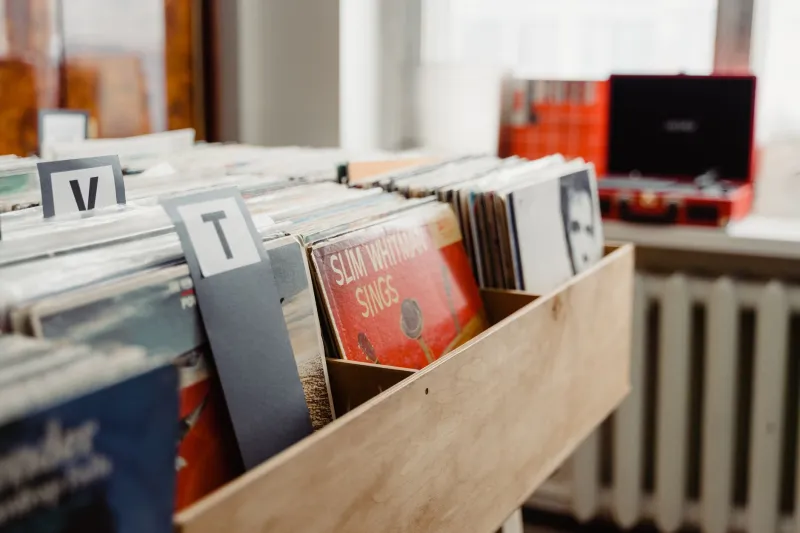
The physical recovery side of the work is equally time-sensitive. Vinyl in estate sales gets priced by the pound when heirs don't know what they have. Regional pressings from small labels — the kind that documented an artist's pre-fame output in, say, a specific corner of the Carolinas or the Pacific Northwest — can vanish into landfills or get pulped before anyone realizes what they were.
Several members of these communities have standing arrangements with estate sale companies and used record stores to be notified when collections come in that might contain obscure regional material. Others have developed relationships with local historical societies in cities that had active music scenes, convincing archivists to flag relevant materials they might not otherwise know to preserve.
The Liner Note Problem
Ask anyone in this world what the single most frustrating gap in the historical record is, and you'll get a consistent answer: liner notes.
For a lot of the acts being documented, the packaging on their records is the only contemporaneous written record of who played on them, who produced them, and when they were made. Label copy on the record itself often contained errors. Trade press coverage was thin or nonexistent. But the liner notes, when they existed, were usually accurate — because the people being credited were right there to complain if they weren't.
The problem is that a lot of those records only got pressed in small quantities, and the physical copies that survive are often in rough shape. Sleeves get separated from records. Paper deteriorates. Ink fades.
Several community members have developed a kind of specialty in liner note recovery — photographing them under specific lighting conditions, running images through enhancement tools, cross-referencing partial credits against musician union records and session logs when those can be found. It's painstaking work that can take weeks for a single release.
"I spent six weeks on the liner notes for a 1973 single that charted at number 87 for one week and then died," said one contributor who asked not to be named. "Six weeks. And I would do it again."
What Gets Built, and Why It Matters
The output of all this effort tends to live in places that most people would never stumble across — dedicated wikis, archived forum threads, shared document repositories that don't exactly advertise themselves. The work isn't optimized for discovery. It's optimized for completeness.
What's being assembled, piece by piece, is something closer to a shadow history of American popular music — one that acknowledges the vast middle ground between the artists who got canonized and the ones who never recorded at all. The one-hit wonder occupied a particular and genuinely interesting position in that landscape: visible enough to leave traces, obscure enough that those traces were never organized into anything coherent.
That's the gap these volunteers are filling. Not because anyone asked them to, and not because there's any money in it.
"Someone made this music," Dennis said. "Real people, real work, real intention. It existed. The least we can do is acknowledge that it existed."
His spreadsheet is currently at 851 rows. He added four more last Tuesday.