What Somebody Forgot Between the Pages Turned Out to Be a Time Capsule
There's a particular kind of thrill that comes from cracking open a used book and finding something tucked inside that was never meant for you. Not a dedication. Not a love note. Something more ordinary than that — a grocery list. Tide pods, bananas, sour cream, call dentist. And yet somehow, weirdly, you feel like you've looked through someone's window.
For most people, that slip of paper gets tossed. For a growing number of collectors, archivists, and obsessive readers scattered across the country, it gets photographed, cataloged, and uploaded to a shared database before it disappears forever.
The Accidental Archive
The hobby — if you can call it that — doesn't have a clean origin story. It seems to have coalesced gradually, the way a lot of quiet internet communities do, through a handful of Tumblr posts in the early 2010s, a few Reddit threads, and eventually some dedicated Discord channels where people started sharing images of what they were finding.
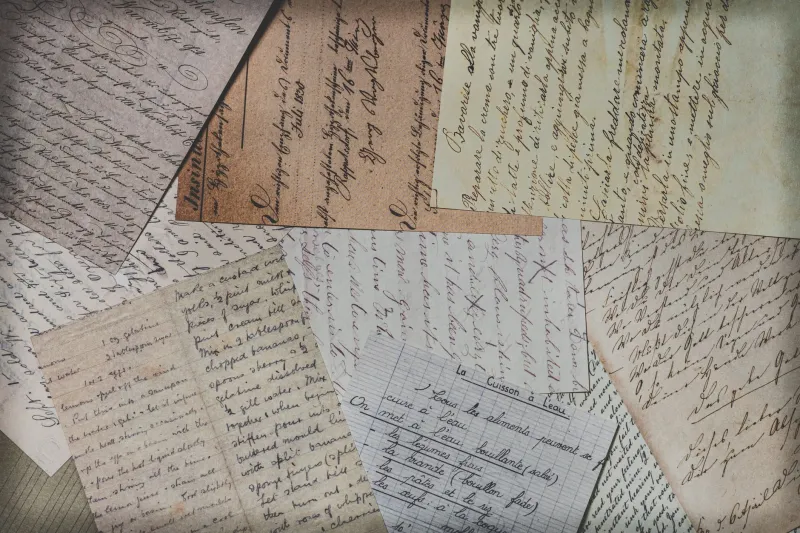
The items themselves are deceptively mundane. Grocery lists written on the back of gas station receipts. To-do lists scrawled on the inside of a torn envelope. Reminders in looping cursive that say things like pick up film or call Marge back about the casserole dish. Some are typed — printed from early home computers, fonts that immediately read as 1994. Others are faded pencil on notebook paper, the handwriting of someone who never expected anyone to look twice.
The people collecting these things aren't doing it for nostalgia exactly. Or not only for that. Several of the more active archivists describe the project in explicitly historical terms.
"These are primary sources," says one collector based in Ohio who asked to go by her username, Marginal_Notes_77. She's been pulling lists from library book sales and thrift store finds for about six years. "A historian studying domestic life in 1970s suburban America would kill for a stack of these. They tell you what people were eating, what they were worried about, what things cost, what brands existed. It's economic history written in someone's handwriting on a Tuesday afternoon."
What the Lists Actually Say
Spend any time in the databases that have sprung up around this practice — some are public-facing, others are invite-only forums — and patterns start to emerge.
Lists from the 1950s and 60s are heavy on brand names that no longer exist. You see things like Crisco, Jell-O salad molds, TV dinners (the good kind), and product references that now require a Google search to decode. Lists from the 70s and 80s start reflecting economic anxiety — quantities get smaller, generics appear, the word sale shows up in the margins as a condition rather than an opportunity.
By the 90s, the lists get longer and more chaotic. More kids' items. More convenience foods. The handwriting changes too — less formal, more rushed. Someone who studies these things noted in a forum post that you can almost track the rise of the dual-income household just by watching the lists get more harried across the decades.
There's also the occasional find that stops everyone cold. One list, discovered in a copy of a mid-century cookbook donated to a library sale in rural Tennessee, contained a detailed budget breakdown alongside the groceries — rent, car payment, a line item for church envelope — that gave a precise, unintentional snapshot of a working-class family's finances in what appeared to be the late 1960s based on the prices listed. It's been shared hundreds of times in archiving communities. Nobody knows who wrote it.
The Libraries Are the Unwitting Source
Here's a detail that gives some of these collectors a sense of urgency: libraries are constantly deaccessioning books. It's not malicious — it's logistics. Old collections get thinned, donated, sold at annual book sales, or quietly sent to pulping facilities when no one buys them. When those books leave the building, whatever's tucked inside goes with them, usually into a trash can.
Some archivists have started building relationships with library staff specifically to get early access to deaccession piles. Others haunt the sales obsessively, buying in bulk not for the books themselves but for what might be inside. A few have negotiated informal agreements where librarians set aside anything they find while processing donations.
"Most librarians think it's charming," says one collector who operates out of Portland and contributes regularly to one of the larger open databases. "Some of them have started leaving notes in the books themselves when they find something — like a little flag that says 'there's a list in here.' They get it."
Not every library is on board. Some institutions have policies about what constitutes patron privacy, even retroactively. The debate about whether a grocery list from 1962 counts as protected personal information is a real one in certain corners of the archiving community, though most people treat it as a philosophical question rather than a legal one.
Building the Database
The infrastructure behind this community is, like the lists themselves, a little improvised. There's no single canonical repository. Instead, there are several overlapping projects: a publicly searchable database that tags lists by decade, region, and content type; a more casual Instagram account that posts a new find every few days with minimal commentary; and a handful of Discord servers where serious collectors share high-resolution scans and debate attribution.
Tagging is where the real work happens. A well-cataloged list gets metadata that includes approximate date range (usually estimated from prices, product names, or handwriting style), geographic origin when known, physical medium, and content categories. Someone, somewhere, has spent real hours deciding whether Ajax should be tagged under cleaning products or brand names or both.
The goal, at least for the more ambitious participants, is something that could eventually be useful to researchers. Social historians, food scholars, economic historians — anyone studying the texture of everyday American domestic life in the 20th century. The lists aren't dramatic. They're not revelatory in any single instance. But in aggregate, they're something close to a longitudinal study of what it meant to run a household in this country across several decades.
Why a Grocery List Can Break Your Heart a Little
There's an emotional dimension to this that the collectors don't always lead with but don't exactly hide either. A grocery list is intimate in a way that a diary isn't. A diary is written with some awareness of an audience, even if that audience is only the future self. A grocery list is written for no one. It's a thought externalizedon paper for the sole purpose of not forgetting the milk.
Which means when you find one, you're seeing someone think. Unguarded, unliterary, completely themselves. The handwriting alone — the way someone bears down hard on certain letters, the abbreviations they invented for themselves, the items crossed off versus the ones that weren't — tells you something you couldn't get from almost any other source.
One list, found in a copy of a Reader's Digest Condensed Books volume from what appears to be the mid-1980s, reads like this: bread, eggs, OJ, medicine for Carl, dog food, don't forget stamps, stamps, STAMPS.
Somebody really needed stamps. Carl needed medicine. We'll never know anything else about either of them. But for the people who collect these things, that's not a dead end. That's the whole point.