The Kitchen Appliance Graveyard Nobody Told You About
There's a specific feeling you get when you spot one at a Goodwill — that vague, almost-recognition. A beige plastic appliance with a cord, some kind of heating element, and a logo you can't quite place. You know it did something, but you couldn't tell anyone what. You put it back on the shelf. Somebody else picks it up.
That somebody might be Marcus Teel.
Marcus runs what he calls "a working archive" out of his garage in Columbus, Ohio — roughly 340 countertop and small home appliances, most of them manufactured between 1971 and 2003, most of them discontinued, and almost all of them things the average American would struggle to identify without a label. He's got a Rival Crockpot from 1974, a Toastmaster Multiwave from the late '80s that was supposed to replace the microwave but didn't, and at least four versions of the same electric wok that were sold under different brand names within the same decade.
"People think I'm collecting junk," he says. "But I'm not. I'm documenting a design language that nobody thought was worth preserving."
Why Nobody Thought to Save These Things
The challenge with small appliances — as opposed to, say, vintage cars or antique furniture — is that they were always considered temporary. They were mass-produced, sold at department stores, and designed to be replaced when something newer came along. Nobody was hanging onto their egg cooker because they thought it might be historically significant someday.
And that's precisely the problem. The 1970s through the early 2000s represent one of the most experimental periods in American domestic product design. Post-war optimism had given way to a kind of gadget-happy consumer culture where companies threw dozens of single-use contraptions at the wall every year to see what stuck. Most didn't stick. Most got returned, donated, or quietly landfilled. The ones that survived are scattered across estate sales, thrift stores, and the occasional eBay listing with zero competing bids.
Kayla Denton, who maintains a cataloging website called Forgotten Countertops — yes, she built an entire site for this — estimates that fewer than 15 percent of the small appliance models produced in the US between 1975 and 1995 have any surviving documentation online beyond a passing mention in a digitized magazine ad.
"I started trying to ID something my grandmother had," she explains. "Couldn't find it anywhere. Not on eBay, not on any collector site, not even in old Sears catalogs. That felt wrong to me. Like something had just... vanished."
The Database Problem
Building a real archive of this stuff is harder than it sounds. These weren't luxury goods. Most manufacturers didn't keep robust records. Many of the companies that made them no longer exist — absorbed into conglomerates, spun off, dissolved entirely. Brand names like Rival, Presto, Wearever, and Regal shifted hands so many times that tracking down original product documentation is basically detective work.
Kayla's site currently catalogs around 2,100 individual appliance models, each with whatever information she could scrape together: production dates when known, original retail price if she could find it, a photo when one exists, and a brief description of what the thing actually did. She fills in gaps by cross-referencing old newspaper ads, digitized home economics textbooks, and a loose network of collectors who DM her when they find something she hasn't logged yet.
Marcus contributes to her database regularly. So does a retired electrician in Arizona who goes by "ApplianceDoc" on the forums and specializes specifically in rotisserie devices — a category that had a surprisingly complex product history in the 1980s that most people have no idea about.
"There was like a rotisserie war happening at the consumer level in 1986 and 1987," ApplianceDoc told us over email. "At least eight different companies were selling competing countertop rotisseries. Now you can barely find one. Most people don't even know that happened."
The Bread Machine Question
Ask anyone in this community about the bread machine and you'll get an immediate reaction. The countertop bread machine — which had its major US commercial moment roughly between 1989 and 1997 — is something of a cultural flashpoint for these collectors. It's obscure enough to be interesting, common enough that most people have a vague memory of one, and discontinued broadly enough that tracking its full product lineage across dozens of brands is a legitimate research project.
Marcus has eleven of them. He can tell you the differences between the Zojirushi and the Welbilt models from the early '90s without looking anything up. He's mapped out which features got introduced when, and which manufacturers were copying which. He's also got at least three bread machines that nobody in the collector community has been able to fully identify — no matching catalog entry, no surviving manual, no online trace.
"Those are the ones that keep me up at night," he says, and he's not entirely joking.
Why It Actually Matters
This is the part where people outside the community tend to get skeptical. Who cares about a discontinued egg poacher? What's the cultural value in knowing that a specific brand of electric can opener was sold at Kmart in 1981?
The people doing this work have a few different answers, and none of them are precious about it.
Kayla's take is straightforward: "These objects tell you what people thought everyday life should look like. What problems they thought needed solving. What they were optimistic about. That's real cultural history, even if it comes in a beige plastic shell."
Marcus frames it more practically. "If I don't document this stuff, it disappears. The knowledge disappears. Nobody's going to write a grant proposal to preserve the Oster Kitchen Center. So I do it."
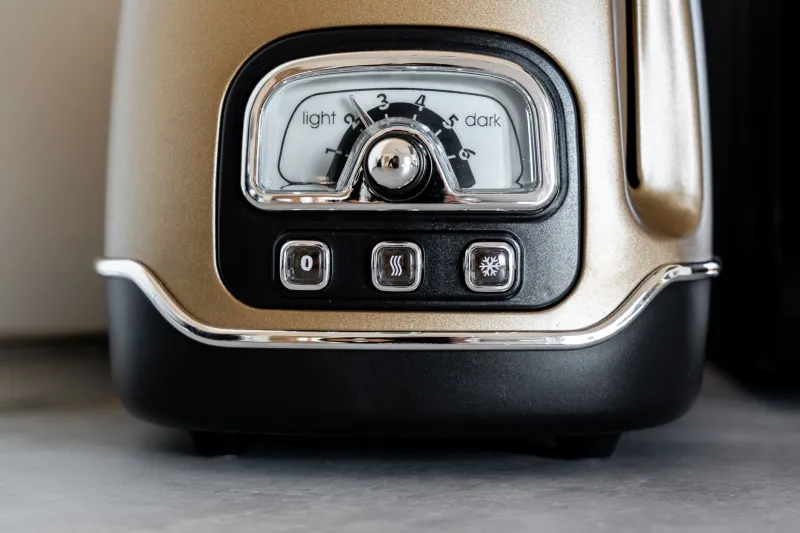
ApplianceDoc just likes the objects. "Some of these things are genuinely beautiful. The design work that went into a mid-'80s Sunbeam is legitimately interesting. People just never looked at it that way because it was in their kitchen making toast."
The Shelf Life of Everything
There's something quietly compelling about a community that has organized itself around the idea that everything deserves to be remembered — even the stuff that wasn't supposed to last. Especially the stuff that wasn't supposed to last.
Next time you're at a thrift store and you see that beige plastic thing with the cord and the mystery heating element, maybe pick it up. Turn it over. Look for a model number. There's a decent chance somebody out there has been waiting for that exact piece of information for years.
Kayla's database is still growing. Marcus's garage is getting full. ApplianceDoc just acquired what he believes is a previously unlogged rotisserie from 1984 and is currently very excited about it.
The kitchen appliance graveyard has curators now. They're just not getting paid for it.