Grandma's Handwriting Is a Primary Source Now: The People Archiving Family Recipe Cards Like Historians
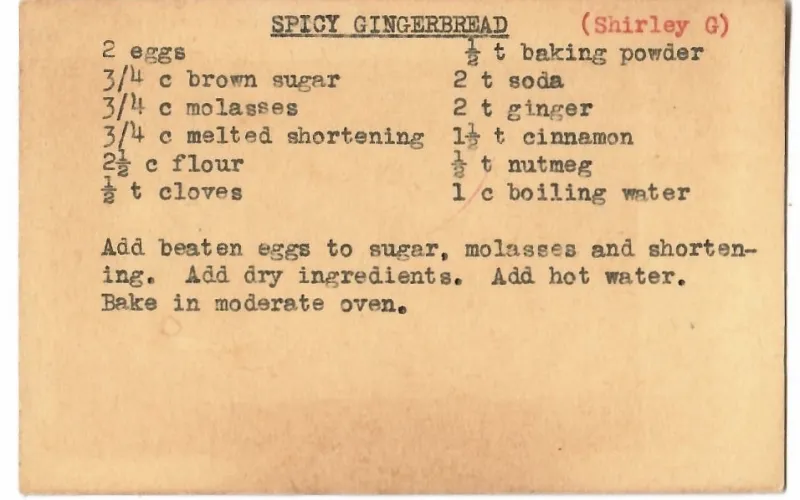
Photo: SJW, CC BY-SA 4.0, via Wikimedia Commons
Somewhere in a plastic bin in a garage in rural Ohio, there's a three-ring binder held together by a rubber band and faith. Inside it: forty years of handwritten recipes on index cards, paper grocery bags, torn notebook margins, and at least one church bulletin. The ink is fading. The grease stains are not.
For most families, that binder gets donated or tossed. But a growing number of people — scattered across Facebook groups, subreddits, and Discord servers that most of us have never heard of — are treating those documents like something closer to archaeological evidence. They scan them. They catalog the margin notes. They argue, passionately, about what a 1960s recipe for "icebox cake" reveals about regional ingredient access during the postwar economic boom.
This is not food blogging. This is something quieter and considerably weirder.
The Archive Starts With a Death, Usually
That's the uncomfortable truth that comes up in almost every conversation about this hobby. The impetus is almost always loss. Someone passes away, a kitchen gets cleaned out, and a box of recipe cards lands in someone's hands who can't bring themselves to throw it away but also doesn't know what to do with it.
Marielle, a 34-year-old librarian in western Pennsylvania who runs a private Facebook group called Handwritten & Hungry, started her archive after her grandmother died in 2019. "I was going through her things and found this old spiral notebook," she says. "Every recipe had these little notes — 'use less salt, Earl doesn't like it,' 'double this for the church potluck.' It was basically a diary that happened to be organized around food."
She photographed every page, uploaded them to a shared Google Drive, and posted in a few genealogy groups asking if anyone else had similar collections. Within a week, she had over two hundred responses.
The group she eventually built now has more than four thousand members. They don't swap recipes to cook. They swap recipes to read.
Margin Scribbles as Cultural Data
What makes these documents interesting — to the people who care about them — isn't the food itself. It's the metadata embedded in the handwriting.
Ingredient substitutions tell you something about supply chains and household budgets. A recipe that calls for oleo instead of butter signals a specific economic era. A note that says "use the good vanilla" implies there was also a lesser vanilla, which implies a household managing resources carefully. Crossed-out measurements suggest iteration — someone kept cooking this dish, kept adjusting it, kept trying to get it right.
"These aren't just recipes," says Daniel, a semi-retired history teacher in Georgia who maintains what he calls a "culinary artifact database" of scanned recipe collections from families across the American South. "They're primary sources. You can trace migration patterns through them. You can see where certain spice combinations show up in Appalachian cooking that you'd normally associate with Caribbean influences. The food moved with people."
Daniel has, by his own count, digitized material from over sixty different family collections. He's developed his own cataloging system, tagging entries by decade, region, ingredient type, and what he calls "annotation density" — how many handwritten notes appear alongside the base recipe.
The Niche Platforms Holding All This
This community doesn't really have a home base. It's distributed across platforms in a way that feels almost deliberately obscure — which, honestly, seems to suit the people involved just fine.
There are subreddits dedicated to sharing scans of old recipe cards, where the comment sections read less like cooking discussions and more like collaborative history seminars. There are private Facebook groups with strict posting guidelines about image quality and attribution. There are a handful of niche archiving platforms — the kind with minimal design and zero algorithmic recommendations — where members upload high-resolution scans alongside typed transcriptions.
Some contributors have started using metadata standards borrowed from actual archival science. EXIF data, provenance notes, condition assessments. One member of Marielle's group, a museum archivist by day, posted a forty-slide presentation on proper flatbed scanning techniques for fragile paper documents. It got shared over three hundred times.
What Gets Lost When the Cards Get Thrown Away
The urgency behind this work isn't abstract. Recipe cards don't last forever. The paper degrades, the ink fades, and once the person who could explain what "a handful" means in your grandmother's particular handwriting is gone, that context goes with them.
There's also a class dimension that the community talks about openly. Published cookbooks — the kind that end up in libraries and archives — have always skewed toward a certain kind of household. The handwritten recipe collection is often the only culinary record left by families who didn't have the resources or cultural access to put their food traditions into print.
"A lot of what I'm scanning would never have been published," Daniel says. "It's working-class Southern cooking. It's immigrant family food that got adapted over generations. If nobody saves it, it's just gone."
Marielle puts it more simply: "My grandmother never would have called herself a cook. She just fed people. But what she knew about food — where it came from, how to stretch it, how to make it taste like home — that was real knowledge. It deserves to be kept somewhere."
The binder in the Ohio garage, the spiral notebook from Pennsylvania, the index cards held together with a rubber band — they're all primary sources. Someone just has to care enough to scan them first.