Malls Nobody Visits Anymore Are Quietly Becoming Something Else Entirely
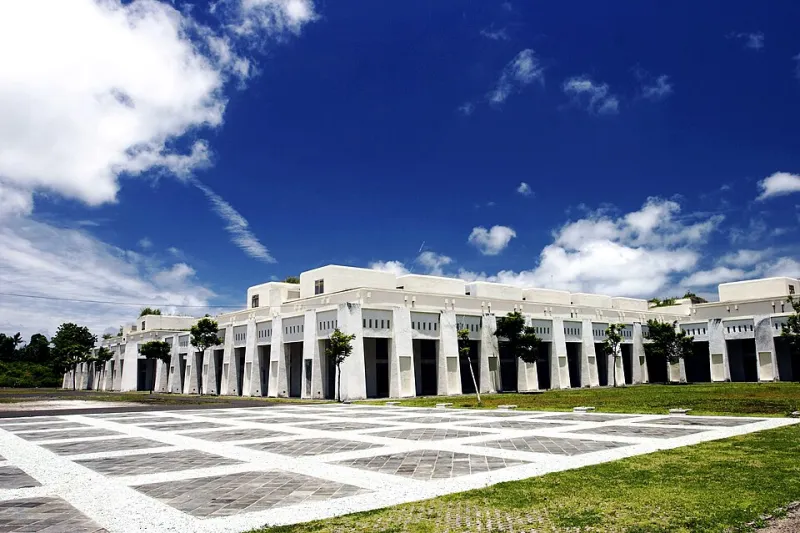
Photo: Krismartin at en.wikipedia, Public domain, via Wikimedia Commons
There's a specific kind of silence that lives inside a dead mall. Not the silence of an empty field or an abandoned house — something stranger. The fluorescent lights still hum in some of them. The food court signage is still bolted to the ceiling. The ghost of a Sbarro lingers somewhere near the old escalators. And yet, if you show up on the right Tuesday evening, you might walk into a room where forty people are watching a local punk band tear through a set, or where someone is running a cash-only vintage clothing market out of what used to be a Waldenbooks.
America has somewhere in the neighborhood of 1,000 malls that are either fully dead or functioning at a fraction of their original capacity. Most people drive past them without a second thought. But inside a growing number of those concrete shells, something genuinely weird and interesting is happening.
The Quiet Takeover
The economics of mall death are pretty well-documented at this point. Anchor stores collapse, foot traffic drops, smaller tenants bail, and the whole ecosystem unravels. What's less documented is what fills the vacuum.
In a lot of cases, it's not nothing. It's just not what anyone was expecting.
Take the situation in smaller Midwest and Southeast cities, where commercial real estate owners — often stuck with properties that can't attract traditional retail — have started leasing space at drastically reduced rates to just about anyone willing to pay. What they get in return is a wildly heterogeneous mix of occupants: a used bookstore next to a firearms training facility next to a ceramics studio next to a woman who sells homemade hot sauce at a folding table on weekends.
These aren't pop-ups in the trendy sense. They're semi-permanent micro-economies operating almost entirely outside mainstream commercial visibility. No Yelp presence, minimal social media footprint, sometimes no signage at all. You find out about them because someone tells you, or because you wandered in looking for a bathroom.
The People Who Actually Use These Places
Marcus, who asked that his last name not be used, runs an electronics repair business out of a former jewelry kiosk in a partially-shuttered mall in the mid-South. He's been there for three years. His rent is low enough that he can charge customers less than any competitor in the area, and his customer base is almost entirely word-of-mouth.
"The mall has maybe eight stores left," he says. "But there's probably thirty of us in here doing something. You just have to know where to look."
That dynamic — the visible emptiness concealing a genuine community — shows up in different forms across the country. In some malls, local artists have moved into anchor store spaces and turned them into open studio arrangements where the public can walk through and watch people work. In others, the food courts have been informally repurposed as community meeting spaces, hosting everything from local political organizing to cryptocurrency meetups to weekly board game nights.
The crypto meetup angle is particularly interesting. Several dead or dying malls have become reliable gathering spots for local blockchain enthusiasts, partly because the spaces are cheap to rent for an evening and partly because — and this part is hard to explain — there's something philosophically fitting about discussing decentralized financial systems in a building that represents the collapse of a previous economic model.
Music in the Ruins
The music scene angle deserves its own spotlight. Underground and DIY music communities in the US have always been good at finding unconventional venues, but defunct malls offer something that basements and warehouses don't: weird, liminal architecture that makes shows feel genuinely uncanny.
Mall corridors have natural acoustics. The old common areas create sightlines and gathering spots that work surprisingly well for live performance. And the sheer strangeness of the setting — playing a set under a broken skylight in what used to be a mall atrium — creates an atmosphere that a purpose-built venue can't replicate.
Several regional scenes have developed informal relationships with mall management or property owners, getting semi-regular access to space in exchange for keeping things clean and not drawing the wrong kind of attention. It's an arrangement that works precisely because it stays off the radar.
Photography and the Liminal Pull
There's also a quieter community of photographers and visual artists who treat these spaces as subjects rather than venues. The aesthetic of the dead mall — that specific combination of faded commercial optimism and creeping decay — has developed its own visual language online, particularly in spaces where people who appreciate liminal photography gather.
But the photographers who actually spend time inside working malls, documenting the micro-economies and informal communities that have taken root, are capturing something different from the ruin porn aesthetic. They're documenting a kind of resilience — the way human communities metabolize failure and find utility in the wreckage.
Why This Matters (Even If Nobody's Watching)
The mainstream conversation about dead malls tends to frame them as either cautionary economic tales or candidates for redevelopment. The redevelopment angle is real — some former malls have been successfully converted into mixed-use housing and office space — but it tends to erase the informal economies that existed in the interim.
What's happening in these spaces is, in its own low-key way, a form of community self-organization. When formal commercial infrastructure fails, people find ways to create informal versions of the same thing. Markets, gathering spaces, creative venues — the functions don't disappear just because the original institutions did.
That's worth paying attention to, even if — maybe especially because — it's happening in places that most of America has written off as dead.
The malls aren't really empty. They're just doing something different now.