Footnote Guardians: The Unsung Volunteers Writing Encyclopedic Histories for Things Nobody Googles

Wikipedia has an article about nearly everything. That part most people know. What fewer people realize is that a significant chunk of those articles — the ones about discontinued regional ginger ales, specific defunct amusement park attractions, synthesizer models that sold maybe four hundred units — were written and are actively maintained by a single person who cares about that subject more than any other human being alive.
These are the footnote guardians. And their commitment is, frankly, kind of staggering.
The Page Nobody Asked For, Written by Someone Who Had To
Take a Wikipedia article about a now-demolished log flume ride that operated at a mid-sized regional theme park in Ohio from 1974 to 1998. The article runs roughly three thousand words. It includes the name of the manufacturer, the original ticket price, a section on a minor 1991 safety incident, a complete list of known surviving photographs, and a properly formatted citation to a Cincinnati Enquirer archive piece from 1997. It has received, by Wikipedia's own internal traffic counters, somewhere around forty-three views in the past calendar year.
The person who wrote it spent the better part of six months doing so.
"People ask why I bother," says one editor who goes by a handle that's just a string of numbers and has spent years maintaining articles about defunct American regional soft drink brands. "But somebody has to. If I don't write it down with sources, it just disappears. And then it's like it never happened at all."
That's the philosophy animating a whole subculture inside Wikipedia's contributor ecosystem — one that doesn't get much press because, by definition, it exists at the edges of what anyone considers culturally significant.
Rigor Without an Audience
What makes this community genuinely fascinating is the standard of scholarship these editors hold themselves to, regardless of how few people will ever read the results. Wikipedia has formal quality tiers — from basic stubs up through "Good Article" and "Featured Article" status — and editors in this niche pursue those rankings with real intensity.
One editor, who has spent years on articles covering obscure early-1980s synthesizers (think instruments that appeared in exactly one catalog, sold to a handful of recording studios in the Midwest, and were discontinued within eighteen months), described the process of getting an article to "Good Article" status as involving peer review, multiple rounds of citation checking, and debates about whether certain claims could be adequately sourced.
"There's a whole talk page conversation I had with another editor about whether a 1983 trade magazine review constituted a reliable source," they explained. "We went back and forth for weeks. For an instrument that probably has twelve working units left in existence."
The talk pages — the behind-the-scenes discussion sections attached to every Wikipedia article — are where a lot of this plays out. Visit the talk page of any deeply obscure article and you'll often find surprisingly heated debates about sourcing standards, factual disputes, and editorial decisions. All for an article that, statistically, is read by almost no one.
The Taxonomy of the Obsession
The subjects these editors adopt tend to cluster in recognizable ways. Abandoned infrastructure is huge — defunct drive-ins, closed regional airports, demolished stadiums. Regional food and beverage brands command serious devotion; there are editors who have essentially become the world's foremost authorities on soft drinks that were available only in a three-state area in the 1970s. Obsolete consumer electronics, particularly audio equipment and early home computers, attract editors who combine technical knowledge with genuine historical curiosity.
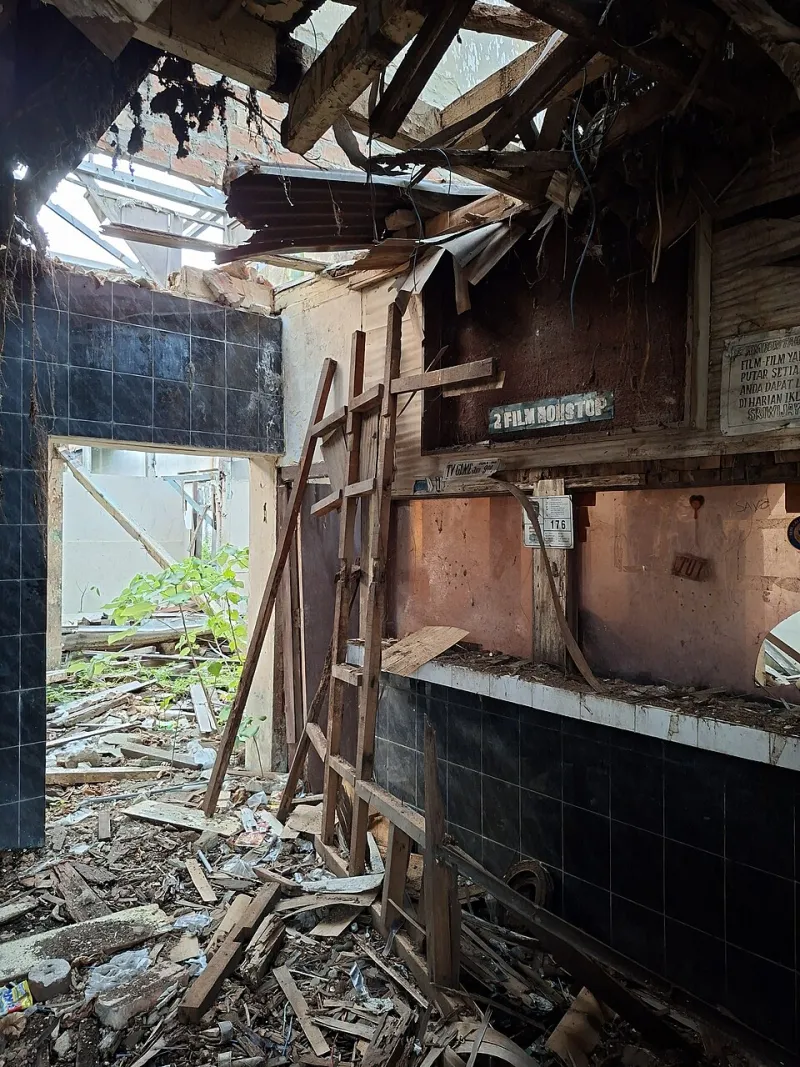
Amusement park history might be the most active niche of all. The community around documenting defunct rides, closed parks, and demolished attractions is surprisingly robust, with editors cross-referencing old newspaper archives, home video footage uploaded to YouTube, and physical ephemera like park maps and brochures that collectors have scanned and shared online.
"There's something about a thing that's gone forever that makes it feel more urgent," says one editor who focuses on defunct American regional amusement parks. "A major landmark gets documented by journalists and historians. A small park in rural Pennsylvania that closed in 1989 — if we don't do it, there's literally nobody else."
The Odd Social World Inside the Niche
It's not a totally solitary pursuit. These editors find each other, usually through Wikipedia's own project infrastructure — the site has WikiProjects organized around topic areas, and even the most obscure subjects often have small associated communities. There are WikiProjects for amusement parks, for defunct companies, for regional history.
Beyond Wikipedia itself, communities form in the usual places — Discord servers, subreddits, specialized forums. Editors share sources, coordinate on research, and occasionally get competitive about who has the more thoroughly documented article in a given micro-niche. It has the low-key intensity of any hobbyist subculture, just pointed at something most people would consider an extremely odd use of energy.
What's interesting is how the internet's broader archival instinct feeds into this. The same impulse driving people to digitize family recipe cards or photograph vintage bathroom tiles before demolition is operating here — a generalized anxiety about things disappearing without record, and a willingness to personally do something about it.
The Question of Why
Ask these editors what they get out of it and the answers are consistent in their earnestness. Some describe a genuine love of research — the hunt for a primary source, the satisfaction of a properly formatted citation. Some frame it explicitly as preservation work, a sense that they're performing a real historical service even if the audience is small. A few admit there's something appealing about being the world's foremost expert on something, even if that something is a ginger beer brand that folded in 1987.
Almost none of them expect recognition. The Wikipedia editing community runs on usernames and talk page interactions; most contributors are effectively anonymous to the outside world. There's no byline in the traditional sense, and the articles they labor over don't carry their names.
That might actually be part of the appeal for some. SpotDW has covered a lot of niche communities where the motivation is quietly disconnected from the usual social media reward loops — no follower counts, no viral potential, just the work and the small community of people who understand why the work matters.
This fits that pattern exactly. The footnote guardians aren't building personal brands. They're just building records.
What Gets Saved
The net effect of all this labor is genuinely significant, even if it's hard to quantify. Wikipedia's coverage of obscure American cultural history — regional businesses, local entertainment venues, niche consumer products — is substantially richer because of these editors. Future researchers, historians, and just curious people trying to understand what a specific corner of American life looked like in 1979 will find actual documented information because someone decided it was worth writing down.
Forty-three views a year. Three thousand words. Six months of research.
Somewhere in Ohio, a log flume ride exists in meticulous detail on a server farm, fully cited, properly formatted, waiting for whoever eventually goes looking. That feels like enough.