The Voice That Still Answers: Saving America’s Disappearing Dial-a-Services
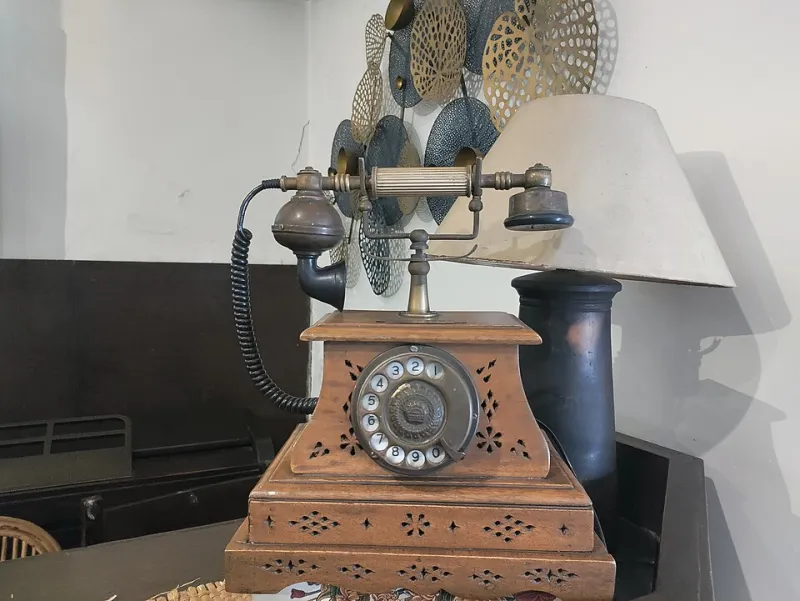
Photo: Janak Bhatta, CC BY-SA 4.0, via Wikimedia Commons
Somewhere in America, a phone number still rings and a calm voice tells you the time. Or the weather. Or a joke so old it has lint in its pockets. For decades, dial-a-services were part of the everyday phone network: dial-a-time, dial-a-weather, dial-a-joke, dial-a-prayer, dial-a-story. They were cheap, local, and deeply weird. Then smartphones ate the phone book, and most of these services went silent. A small group of volunteers is trying to make sure the recordings do not go with them.
A Phone Number Was Once a Destination
Before every answer lived in your pocket, a phone number could be a place. You called it. You listened. You hung up. In the 1970s and 1980s, phone companies and independent operators ran recorded services for time, temperature, road conditions, bedtime stories, horoscopes, and jokes. Some were sponsored. Some were pure public service. Some were just a guy with a tape loop and a spare line. The most famous ones became local institutions, passed around by word of mouth like a secret handshake.
The archivists behind today’s rescue efforts are not a single organization. They are a loose network of audio collectors, retired telecom workers, librarians, and people who never quite got over the sound of a recorded voice saying, 'At the tone, the time will be...' They trade cassettes. They compare line recordings. They email strangers who once worked for a phone company in another state. The work is part detective story, part hoarder intervention, and part public history.
The Hunt for the Last Good Cassette
A lot of these services were never meant to be preserved. The recordings lived on answering machines, cassette decks, reel-to-reel tapes, and later digital voicemail systems. When the service ended, the hardware often went to a surplus sale or a dumpster. What survives is a patchwork: a few seconds captured by a caller with a tape recorder, a station ID from a local radio ad, a complete loop saved by an employee who knew it was the last copy.
One volunteer keeps a spreadsheet of numbers and former operators. Another has a shelf of cassettes labeled with handwritten dates and area codes. They interview retired employees, asking questions that sound absurd out of context: Did the time service use a male voice or a female voice? Was there a click before the weather? How often did the joke rotate? Did anyone complain about the joke? The answers become metadata, and the metadata becomes a kind of map.
The technical challenges are real. Old tape degrades. Line recordings are noisy. Digital files arrive in formats that no current software wants to open. Copyright is a gray area, especially for recorded performances and scripted material. Most of the volunteers are not trying to sell anything. They are trying to document what existed before the evidence disappeared.
Why Bother?
Because the dial tone is a cultural artifact. These services were a bridge between the telephone and the broadcast. They gave people information and company in the same breath. They were also strange, local, and specific in a way the modern internet rarely is. A dial-a-joke in Ohio was not the same as a dial-a-joke in California. The accent, the timing, the ad-libs, the sponsorship tags, all of it carried a sense of place.
The volunteers know they will not save everything. They will not find every number. They will not recover every tape. But they can save enough to show how it worked, how it sounded, and why people called. It is the sort of project SpotDW exists to notice: low-profile, high-specificity, and allergic to hype. No big launch. No investor deck. Just a growing folder of audio files and a stubborn belief that a recorded voice saying 'Thursday' is worth keeping.
As of 2026, the work continues in private servers and shared drives, one scratchy cassette at a time. If you have a tape, a number, or a memory, someone probably wants to hear it. The line may be dead, but the dial tone is still in the room.