The People Who Collect Only One Extremely Specific Thing (And Built Entire Economies Around It)
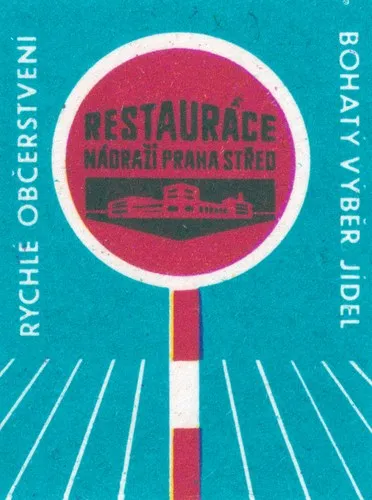
Photo: Unknown (commercial matchbox manufacturer), Public domain, via Wikimedia Commons
There's a guy in Minnesota who collects only Hardee's promotional items from between 1991 and 1997. Not fast-food memorabilia broadly. Not Hardee's stuff in general. That specific six-year window, that specific chain. He has a spreadsheet. He has a network of regional contacts who hit estate sales on his behalf. He has, by his own estimate, spent somewhere north of $4,000 on this.
He is not considered unusual in his community.
Welcome to the micro-obsession economy — a loose constellation of hyper-specialized collecting communities that have quietly built their own authentication systems, price guides, and trading networks almost entirely outside the visibility of mainstream platforms like eBay or Heritage Auctions. These aren't people who collect broadly. These are people who drew a very specific circle and then went extremely deep inside it.
The Narrower the Niche, the More Intense the Community
Conventional collecting wisdom says broader categories mean bigger markets. More buyers, more sellers, more liquidity. But the collectors operating at the micro-niche level will tell you the opposite is true in terms of community intensity.
When your category is narrow enough, everyone who cares about it knows everyone else who cares about it. The collector of vintage hotel key cards — specifically magnetic-stripe era cards from casino hotels that have since been demolished — can probably name every serious player in his space. There are maybe forty of them globally. They all talk regularly.
"It sounds isolating but it's actually the opposite," says Trevor, who runs a private Discord server dedicated to discontinued regional fast-food promotional cups and glasses. The server has 380 members, which sounds modest until you realize it probably represents a significant percentage of everyone on earth who cares about this. "In a broad collecting community, you're nobody. In here, if you find something good, everyone knows it within an hour."
Trevor's server has separate channels for authentication disputes, price history tracking, and what members call "ghost listings" — items that have been documented but never confirmed to actually exist in any known collection. That last channel reads like a mythology archive.
Authentication Without Institutions
One of the more fascinating structural features of these micro-markets is how they've developed authentication systems from scratch, with no governing bodies, no professional appraisers, and no established grading standards.
They built their own.
In the cereal box collecting community — and yes, this is a real and active community, with particular intensity around certain brand design eras from the 1970s through the early 1990s — authentication relies on a combination of print registration analysis, cardstock weight, and what longtime collectors call "color memory." The people who've handled enough boxes from a specific year develop an intuitive sense for whether something is period-correct that they struggle to fully articulate but can apply reliably.
"It's like wine tasting," says Renata, who has been collecting cereal boxes for eleven years and now moderates one of the primary communities dedicated to pre-1995 General Mills packaging. "You can't always explain exactly why something feels off. But you've looked at enough of them that you just know."
When disputes arise — and they do — communities often convene informal panels of senior members who review high-resolution photographs and render collective judgments. These verdicts carry real weight. A disputed item flagged by the community can sit unsold for years.
Where the Money Actually Moves
Mainstream auction platforms are largely absent from how these markets operate, and that's intentional on both ends.
Sellers in micro-niche communities know that listing a 1993 Hardee's promotional glass on eBay means it gets seen by people who don't understand what they're looking at. It either sells for nothing because nobody searches for it, or it gets sniped by a reseller who'll flip it into the actual community at a markup. Neither outcome is great.
So transactions happen in Discord servers, in private Facebook groups, through direct Instagram DMs, and increasingly through invitation-only newsletter lists where members post availability to a curated audience. Payment is usually Venmo or PayPal Friends and Family — which cuts fees but also eliminates buyer protection, a risk the community manages through reputation rather than platform policy.
"Your reputation is everything," Trevor says. "One bad deal and you're done. People talk. There's no appeals process."
Prices in these markets are genuinely difficult to track because so few transactions are publicly recorded. But community members describe price appreciation that would raise eyebrows in more conventional collecting circles. Certain discontinued promotional items that cost pennies originally now change hands for hundreds of dollars among the small group of people who want them.
The Psychology of the Very Specific
Collecting psychologists — yes, this is a specialty — generally describe the appeal of hyper-specific niches in terms of mastery and completeness. A broad collection can never be finished. A narrow enough collection theoretically can be.
"There's something deeply satisfying about being able to say you have everything," Renata explains. "In a broad category, that's impossible. In my category, it's at least imaginable. I might actually get there someday. That keeps you going."
There's also the identity component. In a world where most cultural consumption is algorithmically homogenized, having a taste that is genuinely, verifiably obscure carries its own kind of social currency — at least within the communities where it's legible.
The guy in Minnesota with the Hardee's spreadsheet isn't chasing mainstream validation. He's chasing the specific respect of the thirty other people on earth who understand exactly how hard it is to find a complete 1994 promotional set in unplayed condition.
That's a small audience. But it's exactly the right one.